Most creators treat every brand deal like a one-night stand. The campaign wraps, the invoice goes out, and the relationship goes cold in a thread you never reopen. That is the single most expensive habit in the creator business, because the brand that already paid you once is the warmest lead you will ever have, and you are leaving them sitting in your inbox.
This guide is about flipping that pattern. You already did the hard part: you found the brand, you delivered, you got paid. Now we walk through how to audit the partners you already have, rank them by what they paid, follow up in a way that actually lands the next deal, and build a lightweight system so this happens on autopilot instead of whenever you remember. The goal is to turn a list of invoices into a compounding revenue engine.
Your Past Brand Partners Are Your Highest-Converting Pipeline
The brand that paid you once is dramatically more likely to pay you again than any cold prospect, and most creators ignore that entirely. Roughly two-thirds of brands still run one-off, campaign-based activations even though sustained collaborations generate up to 70% higher engagement than one-offs (Archive, 2025). The gap between what works and what brands default to is your opening.
Here is why this matters to your bottom line specifically. About 68.8% of creators rely on brand deals as their primary income source (Influencer Marketing Hub, 2025), which means the deal pipeline is the business. When 72% of TikTok brand relationships end after a single collaboration, that is not brands deciding you underperformed. It is nobody following up. The relationship died of neglect, not rejection.
A repeat deal is also cheaper for the brand to say yes to. There is no re-vetting, no trust-building from scratch, no risk of a creator who looks good on paper but flops in practice. You are the known quantity. That is use, and it costs you one email to activate.
Audit What You Already Have Before You Chase Anything New
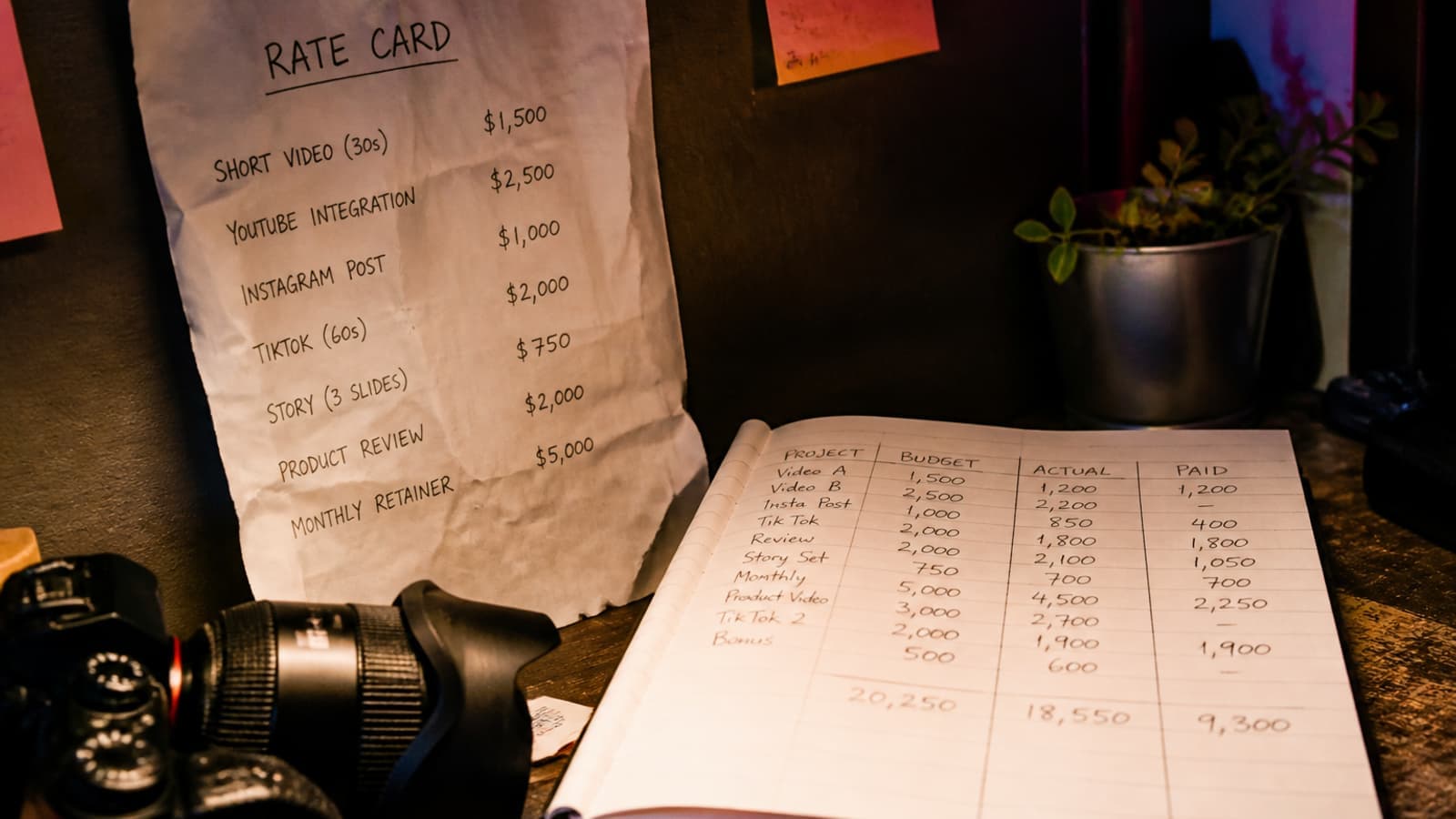
Before you send a single follow-up, build the list. Pull every brand you have ever worked with into one place, then rank them by what they actually paid you, not by how much you liked the campaign. This is the foundation everything else sits on, and most creators skip it because their deal history is scattered across Gmail, a Notion doc, and a half-finished spreadsheet.
The reason to rank by revenue is brutal math. The top 10% of creators capture 62% of ad payments (Business Insider / Archive, 2025), and inside your own book of business the same concentration holds: a handful of brands paid you most of your money. Those are the relationships worth your time first. A $6,000 integration partner deserves a personalized follow-up; a $200 gifting collab can wait or go into a batch.
For each past partner, capture four things:
- The brand contact’s name and email, not the generic partnerships inbox
- What they paid, so you can sort by value
- What you delivered, so your follow-up references real work
- When the campaign ran, so you know how cold the lead has gone
This is the work that turns “I’ve done a bunch of brand deals” into a ranked, actionable pipeline. The brands at the top of that list are where the next $5,000 deal is hiding.
Follow Up With a Wrap Report, Not a “Just Checking In”
The single highest-use follow-up is the post-campaign wrap: a short recap of how the content you made for them actually performed. Most creators never send one, which is wild, because only about 22% of marketers use sales or conversions as their primary ROI metric and 53% struggle to determine the exact ROI of their influencer programs (Linqia, 2025). You handing them clean numbers solves the exact problem keeping their budget locked.
A wrap report does two jobs at once. It proves you delivered, and it reopens the conversation without you having to ask for anything. Send views, saves, shares, click-throughs, and any sales or promo-code data you have, framed around the result the brand cared about. Then close with one line: “Happy to put together something for your next launch.”
Timing matters more than polish here. Responding to an inbound lead within an hour makes conversion roughly 7 times more likely (Lead Response Management Study / Harvard Business Review). The same speed logic runs in reverse: a wrap report that lands the week the campaign ends, while the brand still has the results top of mind, converts far better than one you send three months later when they have moved on.
Stay on Their Radar With New Work and Fresh Ideas
Between campaigns, the move is to stay visible without selling. Periodically reach out to past partners with what is new on your end and, more powerfully, with a specific content idea built for their brand. This is the difference between being a vendor they used once and a partner they think of first when budget opens up.
The strongest version of this is the unsolicited concept. Instead of “let me know if you ever need anything,” send “I had an idea for your spring line, here’s the hook and the format.” It shows you are still thinking about them and it does the brand’s creative work for them. Long-term partnerships are exactly what brands say they want anyway: 56% of brands prefer to reuse the same creators across campaigns (Influencer Marketing Hub, 2025), so you are pushing on an open door.
This is where AI earns its place in your stack. Drafting three tailored content concepts per brand used to be an afternoon; now you can generate hooks, formats, and a rough script in minutes and spend your time refining instead of starting from a blank page. Across the broader creator base, 86% of creators are already using generative AI in their workflows (Adobe Creators’ Toolkit Report, 2025). Use it to make personalized outreach scalable, not generic.
Cadence beats intensity. A light check-in every 6 to 8 weeks with something genuinely useful keeps you front of mind without becoming the creator who only emails when they need money.
Lead With the Brands That Paid the Most
When you start working the list, go top-down by revenue and protect that order. Your time is finite, so the brand that paid you $6,000 gets the custom wrap report and the bespoke content concept, and the brand that gifted you a $40 product goes into a lighter, batched touch. This is not cold; it is how every functioning sales operation prioritizes.
The reasoning is the same concentration principle that shows up everywhere in creator income. Brand collaborations accounted for about 42% of total creator earnings in 2025 (industry reporting, 2025), and within your own book that 42% is lopsided toward a few names. A 10% bump from your top three partners is worth more than landing five new small deals, and it takes a fraction of the effort because the relationship already exists.
There is also a retention reason to treat the big partners carefully. Among creators with 100K+ followers, 45% prefer long-term partnerships over one-off posts (eMarketer, 2025), and your best brand partners feel the same pull toward stability. A recurring relationship with one strong brand smooths out the income volatility that 69% of creators name as a central stressor (Creatorland community sentiment analysis, 2026). The high-paying partner you nurture into a retainer is the most stabilizing thing you can build.
Build a System So This Happens Without You Remembering
None of this works if it lives in your head. The reason creators let warm partners go cold is not laziness, it is that there is no system catching the deals, and the inbox swallows everything. Roughly 25% of brand-deal emails go unanswered by creators (Creatorland DealSync, 2026), which is forfeited money sitting in plain sight.
The fix is a real CRM for your deal flow: every past partner logged, sorted by stage, with their contact info, deal value, and last touch in one view. Once that exists, follow-up stops being a thing you have to remember and becomes a queue you work through. The administrative drag is the bottleneck, not the demand. Most creators can only handle 3 to 5 simultaneous brand deals before quality suffers (creator-economy analysis, 2025), and a chunk of that ceiling is pure inbox chaos you can systematize away.
A working setup tracks three things you cannot hold in your head at scale:
- Stage: which deals are new, in progress, or completed, so nothing stalls silently
- Last contact: when you last touched each partner, so the 6-to-8-week cadence runs on schedule
- Deal value: so the revenue ranking that drives your priority order is always current
Build this once and the compounding starts. Every wrap report sent, every concept pitched, every check-in logged makes the next one easier, and the list of invoices finally becomes the revenue engine it was always supposed to be.
Your Back Catalog Is the Revenue You Already Earned
Most creators chase the next cold brand while a list of partners who already paid them sits untouched in a thread. The pattern that leaves 72% of TikTok relationships dead after one collaboration is not a brand problem, it is a follow-up problem, and follow-up is the cheapest growth lever you have.
Flip the order. Audit what you have, rank it by what it paid, send the wrap report you never sent, pitch the idea you never pitched, and put a system underneath it so none of it depends on your memory. The brands that already trust you are the highest-converting pipeline in your business. Stop treating each deal as an event, and the same back catalog that read like a pile of invoices starts compounding into recurring revenue.
How Creatorland Compares to the Tools Your Workflow Is Already Running
The problem every creator faces here is the same: warm brand relationships go cold because nothing in the stack is built to catch a creator’s own deal flow and prompt the follow-up. Most tools that touch this space are built for brands to manage creators, not for creators to manage brands, so the table below maps each one against whose deals it actually sees, how it surfaces them, and what you get back.
| Tool | Whose deal flow it sees | How it surfaces relationships | What you get back |
|---|---|---|---|
| Creatorland DealSync | The creator’s own Gmail inbox, both sides of the deal | Reads and classifies every brand-deal email into stages | A deal CRM with rates, contacts, and follow-up queue |
| CreatorIQ | Brand’s own outreach only | Filter-based search of a 20M scraped-profile database | Enterprise campaign management for brands |
| GRIN | Brand’s own outreach only | AI creator search tied to Instagram, brand-side CRM | Affiliate and creator program management |
| Aspire | Brand’s own marketplace activity | Discovery marketplace plus campaign workflow | Brand-side influencer campaign execution |
| Manual spreadsheet | Whatever you remember to log | Nothing automatic; you type every row | A static list that goes stale the moment you stop updating |
The pattern is hard to miss. Every brand-side platform sees only the messages the brand sent, which means it structurally cannot see the relationship from your side. DealSync is the only row that sits on the creator’s inbox and surfaces the partners you already have.
Frequently Asked Questions
How long after a campaign should I send the follow-up?
Send the wrap report within a week of the campaign wrapping, while the brand still has the results top of mind. After that, move past partners into a recurring 6-to-8-week check-in cadence so you stay visible without becoming the creator who only emails for money. Speed compounds: the faster the touch lands relative to the result, the warmer the lead stays.
What do I actually put in a post-campaign wrap report?
Lead with the metric the brand cared about, then the supporting numbers: views, saves, shares, click-throughs, and any promo-code or sales data you have. Keep it to one screen and close with a single line offering to build something for their next launch. The report’s job is to prove the result and reopen the conversation, not to be a 12-page deck.
Should I really prioritize brands by what they paid me?
Yes, rank top-down by revenue and protect that order. Brand collaborations made up about 42% of total creator earnings in 2025 (industry reporting, 2025), and within your own book that money is concentrated in a few names. A 10% lift from your top three partners beats landing five small new deals, and it costs far less effort because the relationship already exists.
Can I use AI for the outreach without it sounding generic?
Use AI to draft the content concept and the first pass, then personalize the specifics yourself. The win is generating three tailored ideas per brand in minutes instead of an afternoon, which is what makes personalized outreach actually scalable. Across the creator base, 86% are already using generative AI in their workflows (Adobe Creators’ Toolkit Report, 2025); the ones who win lead with a brand-specific hook, not a template.
How many brand relationships can I realistically nurture at once?
Most creators can handle 3 to 5 simultaneous active brand deals before quality drops (creator-economy analysis, 2025), but nurturing past partners is lighter than running live campaigns. With a CRM tracking last-contact dates, you can keep dozens of relationships warm on a rotating cadence without overloading the active pipeline. The limit is usually inbox chaos, not the relationships themselves.
Why do warm brand deals go cold in the first place?
There is rarely a system catching them, so the inbox swallows the thread. Roughly 25% of brand-deal emails go unanswered by creators (Creatorland DealSync, 2026), which is forfeited revenue sitting in plain sight. The relationship does not end because the brand lost interest; it ends because nobody followed up.
Is a spreadsheet good enough to manage this?
A spreadsheet works until you have more than a handful of partners, then it goes stale the moment you stop manually updating it. It also cannot read your inbox, so every new deal and every reply still depends on you remembering to log it. A CRM that auto-classifies your email removes the data-entry step that kills every spreadsheet system.
How Creatorland DealSync Turns Your Inbox Into a Follow-Up Queue
This whole guide hinges on one thing: catching the warm brand relationships before they go cold, which is exactly the data-entry problem that buries every manual system. DealSync connects your Gmail and reads every brand-deal conversation in your inbox, classifying each one by stage and building a structured contact list of every brand you have ever worked with. The audit step this article opens with, the one most creators never finish, happens automatically the moment you connect.
The scale of what is already sitting there is the point. In its current beta with 913 creators, DealSync has processed 5.58 million emails and identified 108,000 real brand deals across 26,700 unique brands, and roughly one in three beta creators is sitting on 100+ active brand-deal opportunities at signup. It summarizes long threads, flags deals waiting on a reply, benchmarks incoming offers against fair-market pricing, and gives you a task queue so the 6-to-8-week cadence runs on schedule instead of on memory. DealSync is in beta and Gmail-only today, at $9.99 per month with a free 7-day trial, so the creators on Gmail can start turning a pile of invoices into a working pipeline now.