Instagram Micro Influencers Need a Professional Network, Not Just a Following
Instagram’s engagement data makes the case for micro influencers better than any pitch deck could. Brands at every tier are reallocating budget down the follower curve, and the 10K-to-100K creator is the prime beneficiary. But engagement alone does not build a career, and the creator economy’s dirty secret is that the infrastructure underneath the follower count has never been built for creators the way LinkedIn built it for every other profession. That gap is where most micro influencer careers stall.
The Engagement Case for Micro Influencers Is Already Won
Brands have already decided that micro creators are the most efficient spend in the influencer mix. Influencer Marketing Hub’s 2026 report found that 73% of brands now prioritize micro-creator partnerships over macro influencers, and InfluenceFlow reports micro creators sustain engagement rates of 5% to 10% versus 1% to 3% for macro accounts. The buyer side is no longer the question.
The unit economics back the shift. Sociallyin and Statusphere found micro creators run roughly 65% cheaper per engagement than macro creators, with micro Instagram engagement at 3.86% against mega at 1.21%. A brand spending $5 million on creator marketing in 2026 is not chasing one celebrity; it is hiring 40 micro creators who actually convert.
For a creator sitting at 30K Instagram followers, this is the tailwind. The audience has been built. The pitch to brands writes itself. The bottleneck is no longer demand for your work. It is everything that has to happen after a brand decides they want to hire you.
The 10K-to-100K Window Is Where Careers Either Compound or Stall
The 10K-to-100K range is the professional middle class of the creator economy, and it is where the brand inbound starts outpacing the systems creators have to manage it. Influencer Marketing Hub (2025) found 73% of brands prefer to work with micro and mid-tier creators specifically for the engagement-to-cost ratio. Inbound goes up. Most creators have no infrastructure to catch it.
The Archive 2025 report quantifies how long this window takes to build: the average creator takes 6.5 months to earn a first dollar and 24+ months to land a first brand partnership. Once a creator clears that wall and hits the micro tier, deals start arriving inbound from brands the creator never pitched. Then the second problem starts.
Without infrastructure, that second problem is fatal. Goldman Sachs (2025) projects the share of creators earning $100,000+ annually will decline from 4% to 2.5% by 2030 as the base grows faster than the professional middle. The window is widening; whether you stay in it depends on whether you have the layer underneath the audience.
Brand Deals Die In Inboxes, and Most Creators Cannot See It Happening
The largest source of lost revenue for a micro influencer is not a low rate or a missed pitch. It is paid offers buried in an inbox the creator cannot triage. Creatorland’s DealSync beta has processed 5.58 million emails across 913 creators and identified 108,000 real brand deals across 26,700 unique brands, and roughly one in three beta creators is sitting on 100+ active brand-deal opportunities in their inbox at signup.
The math underneath this is brutal. The Radicati Group’s email-volume research found professionals receive roughly 121 emails per day, with only 38% requiring a meaningful response and 62% as noise. A creator scanning that volume by hand is doing search-and-rescue, not deal management. Real offers get past unanswered while the creator is doing the only job audiences see.
Response speed compounds the loss. The Lead Response Management Study, popularized by Harvard Business Review, found that responding to an inbound lead within an hour makes conversion roughly 7 times more likely, and within 5 minutes makes it about 21 times more likely. A brand offer answered three days late is often a deal lost to a faster creator. Most creators do not have a system for any of this; they have a Gmail tab and the hope that nothing important got starred wrong.
Rates Stay Undersold Because There Is No Price-Discovery Layer
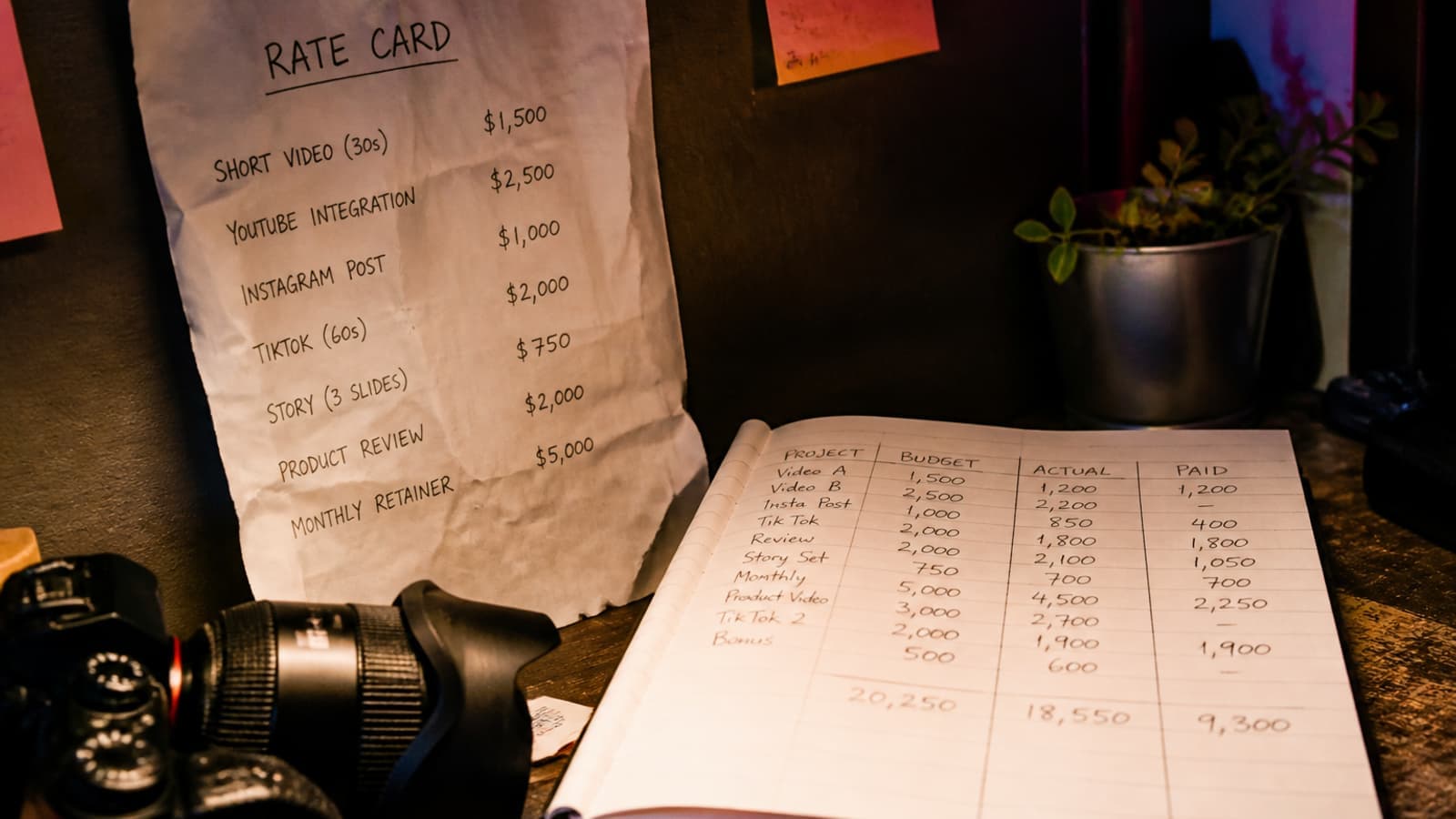
The second silent revenue leak is pricing. Most micro creators are negotiating against themselves because they have no benchmark for what a fair rate looks like for their audience size, vertical, and content type. Influencer Marketing Hub (2025) found that while about half of influencers charge $250 to $1,000 per post, 71% offer discounts for longer-term partnerships, which is a polite way of saying creators are taking less than asking when relationships are on the line.
Viral Nation’s 2025 creator survey found 43% of creators say they would end a collaboration if the pay did not meet expectations, and 40% say attractive compensation is a strong incentive to commit long-term. The willingness to walk is there. The data to know when to walk is not. A creator with 40K Instagram followers in beauty has no easy way to see what a peer with 40K followers in beauty actually charged a comparable brand last quarter.
The professional layer is what closes this gap. When career history, brand partner records, and deal flow live in one place across thousands of working creators, fair-rate benchmarking becomes a query, not a guessing game. Without it, every negotiation starts from scratch and most creators undersell.
Professional Identity Cannot Live In a Canva PDF
The third stall point is identity. A micro creator’s professional record (every brand they have worked with, every collaboration, every project, every peer endorsement) lives nowhere canonical. Influencer Marketing Hub data shows roughly 73% of brands request a media kit before partnering with a creator, but 64% of creators still build those media kits in basic tools like Google Docs and Canva. A static PDF goes stale the day after it ships.
That fragility costs deals. A brand evaluating two comparable micro creators makes the call on whoever can present a credible professional record fastest. The creator whose work history is scattered across Google Drives and DM screenshots loses to the creator whose record is live, verified, and structured, even when the underlying work is equivalent.
LinkedIn solved this for every other profession by making professional identity a living graph the worker controls and updates as they go. Doctors got Doximity. Designers got Behance. The creator economy got a folder of PDFs and a Linktree. Until the work history, the brand partners, and the collaboration record become a living graph the creator owns, professional identity will keep losing deals the audience already earned.
The Peer Network Is the Career Asset No Algorithm Hands You
A micro creator’s career compounds through other creators as much as through brands. The peer who refers a brand, the friend who shares a rate, the manager who answers a DM: these connections are the substrate of every long career in this industry, and they are precisely what algorithm-led platforms do not build. Creators 4 Mental Health (2025) found 54% of creators want peer support and a creator community, but only 27% are currently part of one, and 66% have never been part of any creator community.
The isolation is not soft. Leapers (2024) found 90% of freelancers report feeling isolated or lonely, with 34% saying it happens frequently. Viral Nation’s 2025 global creator study reported 52% of creators experience burnout and 37% are considering leaving their careers altogether. A creator with no professional peer layer is not just lonely; they are operating without the relationship graph their career actually runs on.
Talent representation has historically only solved this at the very top. Top YouTubers have CAA-style agents and private WhatsApp groups. Everyone below the top 1% has been on their own. The micro tier needs a professional network that surfaces peers by shared brand history, audience overlap, and craft, not by who the algorithm decides should appear in a Discover feed.
A Professional Network Converts Audience Traction Into a Business
The shift from creator to operator happens when audience traction connects to professional infrastructure. The deal pipeline becomes a CRM. The work history becomes a verified record. The peer network becomes a referable graph. The rate benchmark becomes a query against actual market data, not a guess.
This is the layer LinkedIn built for office workers and what every brand-side influencer CRM has structurally refused to build for creators. Modash’s 2025 analysis noted that CreatorIQ’s 20-million-creator database “frequently produces irrelevant results” because it relies on scraped public profiles rather than creator-volunteered data, and its enterprise pricing is “out of range for small and mid-market businesses.” Scraped data is dead data. A creator’s career cannot run on a third-party database the creator does not control.
The infrastructure has to be built creator-first. The profile is owned by the creator. The brand partner record is verified by the creator. The deal flow lives in the creator’s actual inbox, not in a brand’s outreach CRM. This is the layer that converts a 30K Instagram following into a career; without it, the audience compounds while the business stalls.
What a 10K-to-100K Creator Should Stand Up Right Now
The practical move at the micro tier is to stop treating professional infrastructure as a problem you solve later. The longer it goes unbuilt, the more deals leak out the bottom. Three things belong on every micro creator’s stack:
- A living professional profile that auto-populates from Instagram, TikTok, and YouTube and shows every verified brand partner. A profile a brand can find, trust, and act on without asking for a PDF.
- A deal pipeline that reads your inbox and sorts brand conversations by stage so paid offers stop dying under newsletter noise. With one in three creators in the DealSync beta sitting on 100+ active opportunities at signup, the leak is bigger than most creators realize.
- A peer graph built from real working relationships (shared brand partners, collaboration history, craft overlap) so the career compounds through introductions, not just impressions.
None of this replaces creating. It removes the structural reasons your created work fails to convert into a sustainable business. The audience is the input; the professional layer is the conversion engine.
The Career, Not the Follower Count, Is the Asset
The 10K-to-100K window is the most important career-defining stretch a creator will run, and it is the stretch where infrastructure either compounds the audience into a business or lets it leak out as missed deals, undersold rates, and lost peers. The engagement case for micro creators is already won on the brand side. What decides which creators stay in the window and which fall out is whether the layer underneath the follower count actually exists.
Your fans see the creator. Your peers see the professional. The career is what you build out of the second one, and you cannot build it on Gmail, Canva, and hope.
How the Category Stacks Up for the Micro Tier
Most platforms a micro creator considers were built for someone else: brands looking for inventory, enterprises buying campaign software, or social audiences scrolling a feed. The columns below compare how each addresses the three things a micro creator’s career actually runs on: where the data comes from, what gets surfaced to brands, and what the creator gets back.
| Platform | Data source | What it surfaces to brands | What the creator gets back |
|---|---|---|---|
| Creatorland | First-party, creator-OAuth'd from IG, TikTok, YouTube | Living profile with verified brand partners, deal flow, peer graph | Professional network, DealSync inbox CRM, fair-rate benchmarks |
| CreatorIQ | Scraped third-party profiles across 20M creators | Filter-based search results powered by Creator Graph AI | Nothing; creator is inventory, not customer |
| GRIN | Scraped + authenticated profiles, 190M+ creators | Outreach CRM and gifting workflows for brand teams | Inbound from brands using GRIN; no creator-side tools |
| Aspire | Marketplace of 1M+ inbound + filtered creators | Brand-discovery marketplace listings | Marketplace exposure, payments, no career graph |
| Self-reported professional history | Job-and-recruiter graph built for office careers | Professional network, but structurally not for creator work | |
| Modash | 350M+ scraped public profiles | Filter and AI visual search for SMB brands | Discovery-only; no creator-side tools |
Frequently Asked Questions
How many followers do I actually need before professional infrastructure matters?
Roughly 10K on Instagram or TikTok, or 10K subscribers on YouTube, is where inbound brand volume starts exceeding what an unaided inbox can triage. Below that, you are still in audience-building mode. Above 30K, the cost of not having infrastructure starts compounding fast, because real paid offers begin arriving from brands you never pitched.
Isn’t LinkedIn enough for the networking side?
LinkedIn was built for office careers, not creator careers. Noah Eisemann of VML told Marketing Brew in July 2025 that “one of the hardest things about LinkedIn is the data you can capture... how walled a garden it is as a platform.” It does not capture who you actually worked with as a creator, what you charged, or what the campaign delivered, which is exactly the data your career runs on.
How is this different from a brand-side influencer CRM like CreatorIQ or GRIN?
Brand-side CRMs treat creators as inventory: scraped, indexed, and searchable by brand teams without the creator’s input. A professional network inverts that. You control the profile, you OAuth the social data, you own the deal record. The brand-side platform sees the creator as a row in a database; the professional network sees the creator as the customer.
What about media kits? Aren’t those the professional layer?
Media kits are static documents that go stale the day after they ship. A living professional profile updates automatically when you OAuth your socials, tag a new brand partner, or close a deal. Influencer Marketing Hub data shows 78% of brands prioritize creators with comprehensive media kits, but 64% of creators still build them in Google Docs and Canva, which is precisely the gap a real professional layer closes.
Does this work if my deals all come through DMs, not email?
Most paid brand deals at the micro tier still originate or move to email at some point in the negotiation, because brands need a paper trail for legal and finance. Even when first contact is a DM, the contract, the brief, the deliverables, and the payment terms run through email. That is the layer DealSync sits on top of.
How long does it take to actually see value?
Creator-side, value lands the day you connect Gmail to DealSync: 913 beta creators saw 108,000 real brand deals identified across 5.58 million emails. Brand-side and peer-side value accrues as you complete your profile, tag brand partners, and build connections. Creatorland’s data shows creators who make 5+ connections in their first two weeks retain at 3x the baseline rate.
How Creatorland Builds the Professional Layer Underneath the Micro Tier
Every argument in this article points at the same gap: the layer underneath the follower count, where deals, identity, and peer relationships actually live, has never been built for creators. Creatorland is the platform for the work the audience doesn’t see. The creator owns a living professional profile auto-populated from Instagram, TikTok, and YouTube, every brand partner is verified, the deal flow lives in DealSync’s Gmail-connected CRM, and the peer graph compounds through real working relationships, not algorithmic guesses.
The traction is built on the same thesis. 97,000+ members, 300% year-over-year growth, $0 spent on marketing, and engagement metrics that run 5 to 7 times the industry average on retention, with 42% Day-30 retention against an industry benchmark closer to 5%. DealSync’s 913-creator beta has surfaced 108,000 real brand deals from 5.58 million processed emails, and roughly one in three beta creators discovered 100+ active opportunities sitting unanswered in their inbox at signup.
For a creator in the 10K-to-100K window, the order of operations is straightforward: build the profile, connect Gmail, find your peers. The audience is the input. Creatorland is the conversion engine underneath it.