Why Creators Need a Living Resume the Way Professionals Need LinkedIn
A stale profile costs office professionals opportunities they never knew existed, and creators are running the exact same risk with far more money on the table. Brand deals are the primary income source for roughly 68.8% of creators (Influencer Marketing Hub, 2025), which means a profile that doesn’t show what you’ve done is a paycheck you’ll never see. This guide draws the line between the discipline professionals apply to LinkedIn and the discipline creators need to apply to their own professional presence, because the gap between the two is already showing up in who gets the deal.
Professionals Treat LinkedIn as a Living Document, and It Pays
The professionals who keep their profiles current capture opportunities the dormant ones never see. InfluenceFlow reports that professionals with active personal brands receive 47% more inbound opportunities than those with dormant profiles, citing LinkedIn’s 2025 workplace report. The same source found that 72% of B2B decision-makers trust professionals with an active thought-leadership presence more than company marketing alone.
That discipline isn’t vanity. It’s the recognition that the people hiring, partnering, and referring are searching a database, and a profile that hasn’t moved in a year is functionally invisible to them. LinkedIn now counts roughly 1.3 billion members (LinkedIn / CNBC, 2026), and the ones who win on it are not the ones with the biggest titles. They’re the ones who keep the page fresh: new roles, new projects, new proof.
Creators face the identical mechanic, just on a different platform with a bigger downside. When a brand or agency goes looking for someone who has run a campaign like the one they’re planning, the creator with a current, complete professional presence shows up. The one whose work history lives in a Canva PDF and a tangle of email threads does not.
A Creator’s Profile Is a Resume, and It Decides Who Finds You
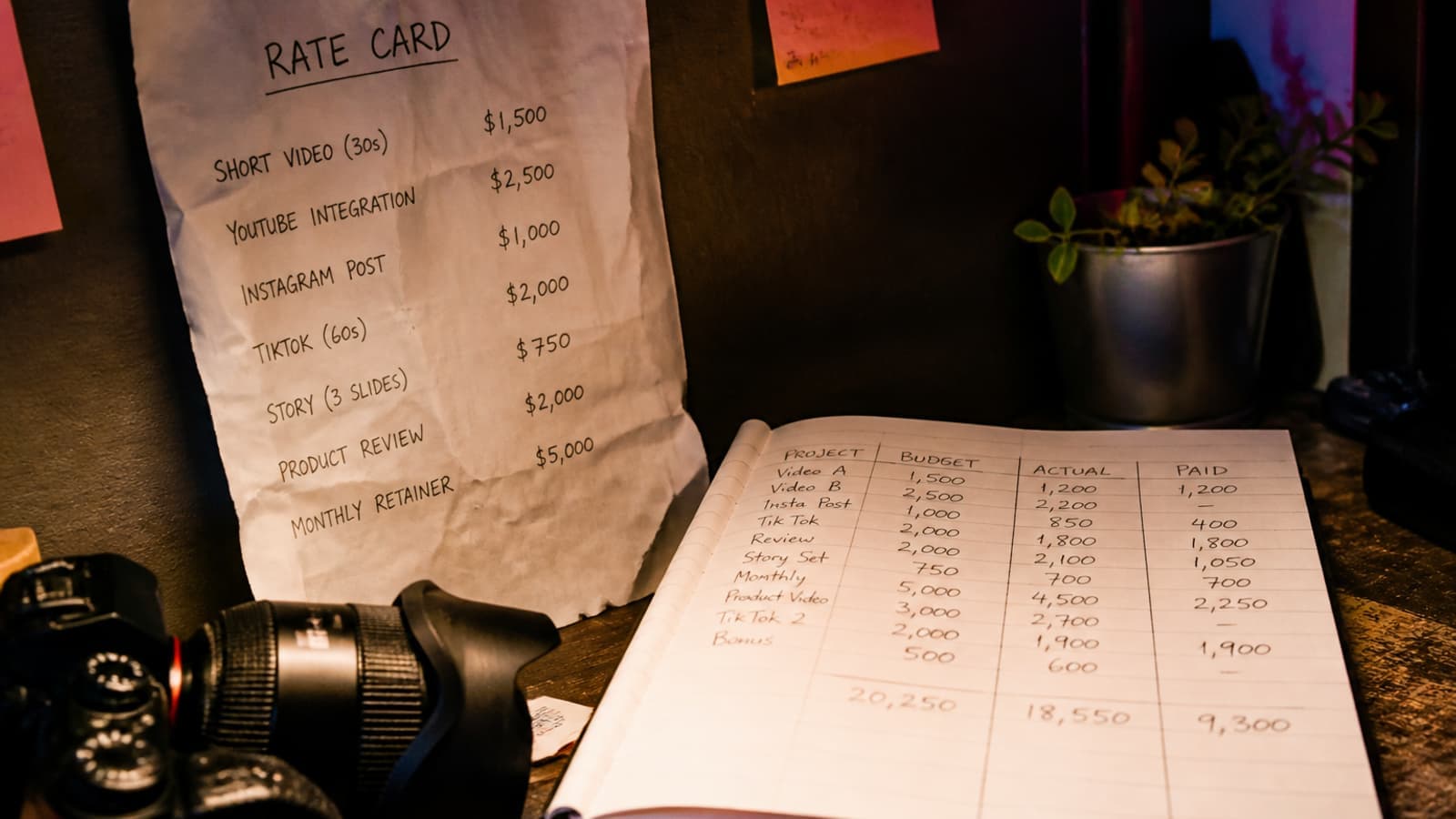
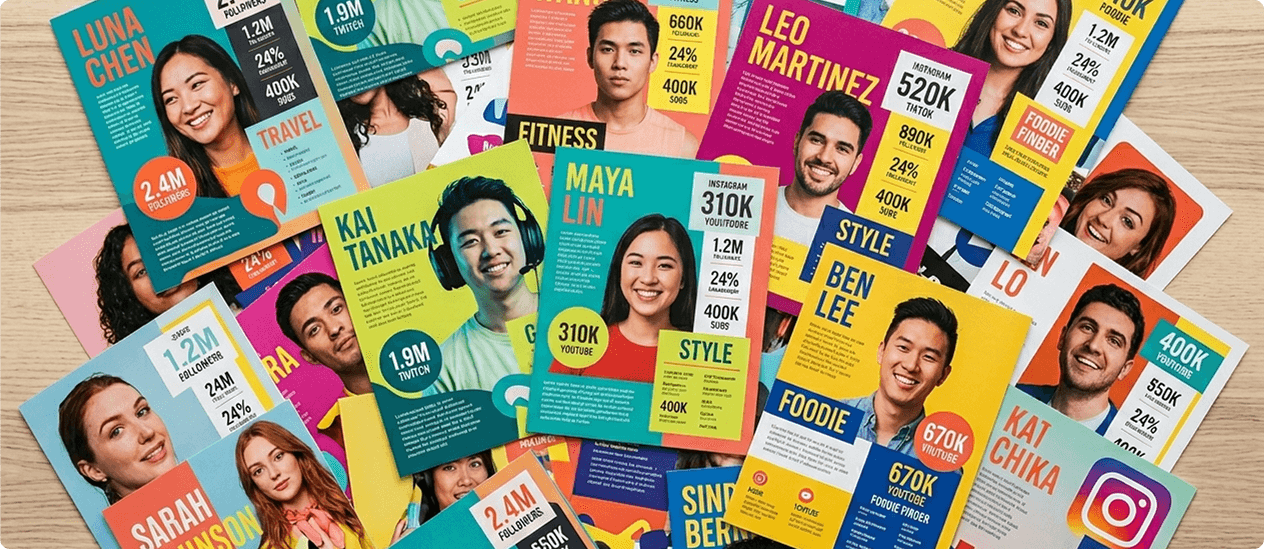
Your profile is the creator-economy equivalent of a resume, and brands hire off it the same way recruiters hire off LinkedIn. Roughly 73% of brands request a media kit before partnering with a creator, yet 64% of creators still build those kits in basic tools like Google Docs and Canva (Influencer Marketing Hub, 2025). That gap is the whole problem: brands want a credible, current record, and most creators are handing them a static document that’s out of date the moment it ships.
The difference between a resume and a media kit is that a resume is supposed to be a living thing you keep current, and a media kit is a snapshot you rebuild from scratch every pitch. On Creatorland, your profile works like the first one. Your Posts and Projects auto-populate from Instagram, TikTok, and YouTube OAuth, your Skills & Past Experience span more than 100 specialties, and My Brand Partners shows every collaboration you’ve logged. It updates as you work instead of decaying the second you stop.
The reason this matters more for creators than for office workers is the income concentration. Brand collaborations accounted for about 42% of total creator earnings in 2025 (industry reporting, 2025), so the profile that surfaces those collaborations is directly tied to the channel that pays the bills.
Surface the Brand Partnerships That Signal You Can Do the Job
Lead with the collaborations that prove you’ve done exactly what the brand searching for you needs, because that proof is what filters you in. The old talent-agency model was a long list of 100 creators who’ve all done vaguely similar things; the modern version is a brand searching for the person who has actually run a campaign in their exact category before, then cherry-picking. Your brand-partner history is the signal that puts you in that shortlist.
This is where most creators leave money on the table. They have real, verifiable brand work, and it’s invisible because it lives in their inbox and their camera roll instead of on a profile a brand can find. Creatorland counts 7,000-plus members with verifiable brand partnership history visible in their public profiles through brand-partner tags, mentions, and collaborator links, and that number is climbing as more creators complete profiles and connect socials.
Tagging your brand partners does two things at once. It builds your own credibility, and it plugs you into the network graph: the average DealSync user has 5 identified brand partners on their profile plus 50-plus off-platform creators who worked with the same brands (Creatorland DealSync, 2026). That overlap is how brands find lookalikes and how creators find their next collaboration.
Most of Your Brand History Is Buried in Your Inbox Right Now
The collaborations that should be on your profile are sitting unsurfaced in your email, and you probably can’t see how many. In DealSync’s current beta, 913 creators connected Gmail and the tool identified 108,000 real brand deals across 26,700 unique brands and 103,000 unique contacts (Creatorland DealSync, 2026). Roughly one in three of those creators was sitting on 100-plus active brand-deal opportunities at signup.
That’s the hidden cost of a stale profile made literal. The proof of your professional history exists; it’s just trapped in threads you’ll never manually dig through. DealSync connects your Gmail, reads every brand-deal conversation, and classifies each one by stage so the record builds itself.
The downside of leaving it buried isn’t theoretical. About 25% of brand-deal emails DealSync surfaces go unanswered by creators (Creatorland DealSync, 2026), and the speed cost is brutal: responding to an inbound within an hour makes conversion roughly 7 times more likely (Lead Response Management Study / Harvard Business Review). A deal you never saw is a deal you never closed.
Discoverability Is the Whole Point, and Google Indexes Your Profile
A profile only pays off if the people hiring can find it, and on Creatorland your profile gets indexed by Google, not just searched internally. Across the platform, member profiles generate 7,000 to 9,000 Google clicks per month and surface on the first page of Google more than 115,000 times per month, at a 4.4% click-through rate. That’s discoverability working the way it does for a well-kept LinkedIn profile: people searching land on your page without you pitching anyone.
This is the part the media-kit-in-Canva approach can’t touch. A PDF buried in a Drive folder ranks for nothing. A living profile ranks for your name, your niche, and your brand work, which means a brand researching creators in your category can find you cold.
Take Charlotte Godoy, a creator on Creatorland: her profile generated 4,000 impressions in May 2026 alone and drove 1,000 clicks. That’s exposure to brands and other creators she didn’t have to chase, earned by a profile that stays current and stays public.
What to Audit Before You Chase Anything New
Audit what you already have before going hunting for new deals, because the proof you need is almost certainly already in hand. Most creators can handle only 3 to 5 simultaneous brand deals before quality suffers (creator-economy analysis, 2025), so the use isn’t volume. It’s making the work you’ve already done visible and discoverable.
Run this checklist on your own profile:
- Connect your socials. OAuth Instagram, TikTok, and YouTube so your Posts and Projects auto-populate instead of sitting empty.
- Tag every brand partner. Each tag is a credibility signal and a node in the network graph that brands search.
- Lead with the brands that paid the most. Put your strongest, most recognizable collaborations in your Featured section where a brand sees them first.
- Fill out Skills & Past Experience. Brands filter by what you’ve actually done, not by follower count.
- Connect Gmail to DealSync. Surface the brand history buried in your inbox and let the record build itself.
The creators who treat this as a one-time chore lose ground to the ones who treat it as maintenance, the same way a professional who updates LinkedIn once and forgets it loses ground to the one who keeps it alive.
The Stale-Profile Gap Is Already Showing Up in Deal Flow
The professionals who keep their profiles current have always quietly out-earned the ones who let them go stale, and creators are now living that same split with brand deals carrying most of their income. Brand deals are the primary income source for roughly 68.8% of creators (Influencer Marketing Hub, 2025), which is why a profile that doesn’t surface your collaborations isn’t a missed formality, it’s missed money. The creators treating their profile as a living document are getting found by brands searching for exactly what they’ve done; the ones letting it go stale are invisible to that search and don’t even know it.
Your fans see the creator. Your peers and the brands hiring see the professional, and they can only see the version of you that’s actually published, current, and discoverable.
How Creatorland Compares to the Tools Creators Are Already Using
Creators stitch their professional presence across a media-kit builder, a link tool, and a brand-side CRM they don’t control, and none of those keep a current, discoverable record the way a resume should. The table below compares how each option handles the three things that decide deal flow: where the data comes from, whether it’s discoverable, and whether the creator owns it.
| Tool | How the profile is built | Discoverability | Who controls the data |
|---|---|---|---|
| Creatorland | Auto-populated from IG, TikTok, YouTube OAuth plus DealSync inbox history | Google-indexed, 115K+ first-page impressions/month | The creator |
| Canva / Google Docs media kit | Manually rebuilt for every pitch | Not indexed; a static PDF in a folder | The creator, but stale instantly |
| CreatorIQ | Scraped from public profiles into a 20M-creator database | Brand-side search only, not public | The brand; no creator OAuth |
| GRIN | Filter-based search on third-party data | Brand-side only; returns overexposed names | The brand; creators don’t opt in |
| Linktree | Manual link list | A link page, not a professional record | The creator, but no work history |
The pattern is clear: the brand-side CRMs are databases creators don’t control, the media kit and link tools are static and unsearchable, and only a living, indexed, creator-owned profile does the job a resume is supposed to do.
Frequently Asked Questions
How often should a creator update their profile?
Treat it like a professional treats LinkedIn: update it whenever you finish a brand deal or launch new work, not on a schedule. On Creatorland, OAuth and DealSync handle most of this automatically by pulling fresh Posts, Projects, and brand history as you work, so the maintenance burden is far lower than rebuilding a media kit each pitch.
Why does a Google-indexed profile matter if I already have a big following?
A following lives on a platform you don’t own and isn’t searchable by a brand researching your category. An indexed profile surfaces on the first page of Google more than 115,000 times per month across Creatorland, which means brands and other creators find you cold, without you pitching, the same way recruiters find a strong LinkedIn profile.
I have brand deals but they’re scattered across email. How do I get them onto my profile?
Connect Gmail to DealSync, which reads every brand-deal thread and classifies it by stage. In beta it identified 108,000 real deals across 913 creators (Creatorland DealSync, 2026), and roughly one in three of those creators was sitting on 100-plus opportunities they couldn’t manually surface.
Should I show every brand I’ve worked with or just the big ones?
Lead with the brands that paid the most and are most recognizable in your niche, then show the depth behind them. Brands searching for a lookalike want proof you’ve run a campaign in their exact category, so your strongest, most relevant collaborations belong in your Featured section first.
Is tagging brand partners just for credibility, or does it do something else?
Both. Each tag signals credibility to a brand evaluating you, and it also connects you to the network graph: the average DealSync user has 5 identified brand partners plus 50-plus off-platform creators who worked with the same brands (Creatorland DealSync, 2026). That overlap is how lookalike discovery and new collaborations happen.
Does this matter for smaller creators, or only big ones?
It matters more for smaller creators, because vetting beats follower count and a complete profile lets you compete on proven work rather than raw reach. Roughly 73% of brands prefer micro and mid-tier creators for their engagement-to-cost ratio (Influencer Marketing Hub, 2025), and a discoverable record is how those creators get found in the first place.
How is this different from a media kit?
A media kit is a static snapshot you rebuild every time; a Creatorland profile is a living, indexed document that updates as you work. Brands request media kits, but 64% of creators still build them in Google Docs and Canva (Influencer Marketing Hub, 2025), which means the record is out of date the moment it ships and invisible to search.
How Creatorland Keeps Your Profile Current and Discoverable Through OAuth and DealSync
The whole argument of this piece is that a stale profile costs creators deals they never see, and Creatorland is built to make the maintenance automatic instead of a chore you forget. Your profile auto-populates from Instagram, TikTok, and YouTube OAuth, your brand history pulls in through DealSync’s Gmail connection, and the finished page gets indexed by Google, generating 7,000 to 9,000 clicks and 115,000-plus first-page impressions per month across the platform at a 4.4% click-through rate.
DealSync is the engine underneath the brand-history part. Connect Gmail and it reads, classifies, and sorts every brand-deal conversation by stage, surfacing the 100-plus opportunities one in three beta creators didn’t know were sitting in their inbox. It runs $9.99 per month with a free 7-day trial, and it’s Gmail-only in beta today, so that’s the honest scope.
The result is the discipline professionals apply to LinkedIn, automated for how creators actually work. Charlotte Godoy’s profile pulled 4,000 impressions and 1,000 clicks in May 2026 because it stays current and stays public, which is exactly the exposure a creator gets when the profile maintains itself instead of decaying in a Canva folder.